

December is a month of busy anticipation! We often find ourselves caught up in the hustle and bustle of preparing for the sacred and secular celebrations that arrive at the end of the year. Yet in the midst of this activity, Advent invites us into a different rhythm—one of waiting and watching.
On the Avery Campus, our Spiritual Life program is engaging our residents in the intentional spiritual practice of observing Advent, the four-week period before Christmas Day. The word Advent comes from the Latin advenio, meaning “to arrive,” “to come to,” “to arise,” or “to develop.” I love Advent because it makes space for two truths to exist at once: we pause in holy waiting even as we prepare for the joy of Christmas.
Marking the Days with Rituals
Both sacred and secular rituals help us count down the days before Christmas. We decorate our homes, workspaces, and community areas. We gather for tree lightings and holiday parades, and share our wish lists with Santa. We participate in meaningful worship experiences like the Moravian Love Feast or the Hanging of the Greens. We open Advent calendars filled with small delights.
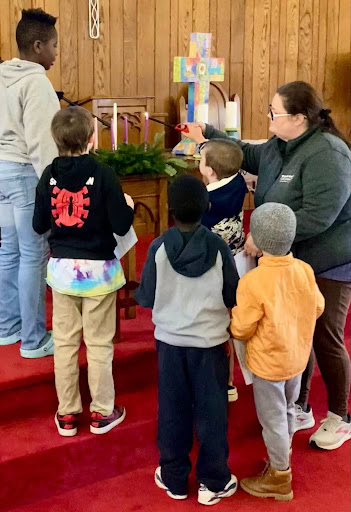
On the Avery Campus, we mark each week by lighting a candle on the Advent wreath. Traditionally, we light the candles during chapel fellowship. This year, we’ve expanded that practice by inviting each cottage to build and light their own Advent candles each Sunday night at dinner. Each lighting includes a scripture reading, reflection, and prayer centered on one of the weekly themes: Hope, Peace, Joy, and Love.
This rhythm of lighting candles and reflecting together helps us cultivate resilience and faithfulness in the present moment. Advent is an active waiting—one rooted in trust, expectation, and a deep belief in God’s timing, even amid life’s uncertainty.
Hope
In a recent sermon, Pope Leo XIV reflected on hope as participation in God’s holy work. “To hope is to participate: this is a gift that God gives us,” he said. “No one saves the world alone. Not even God wants to save it alone: He could, but He does not want to, because together is better.”
Theologian Marina Berzins McCoy adds:
“We have our own individual past experiences of where God has been present. God’s light and love always shine through whatever kinds of darkness that we might encounter: illness, grief, injustice, worries about work or relationships, spiritual aridity or darkness. So, we wait with hope. We wait with one another and not alone.”
Peace
The Quaker minister and artist Edward Hicks was captivated by the biblical vision of peace found in Isaiah 11:6: “The wolf shall live with the lamb, the leopard shall lie down with the kid, the calf and the lion and the fatling together, and a little child shall lead them.”Hicks painted over sixty versions of The Peaceable Kingdom, blending the prophet’s imagery with the world around him—his own young nation. Through his art, Hicks pointed to a vision of God’s promised peace breaking into everyday life, hinting that glimpses of new creation already surround us.

Joy
United Methodist pastor Melissa Meyers offers a powerful description of joy:
“Joy is deep,
Joy is wisdom,
Joy is holy,
Joy is resistance,
Joy is a different way of viewing the universe,
Joy can embrace the fullness of our human experience,
Joy recognizes the challenges of our human lives and embraces them as part of it all,
Joy looks at the fragility of life and says ‘enjoy what you have.’”
Joy does not ignore hardship—it holds it gently, allowing gratitude and wonder to rise even in difficult seasons.
Love
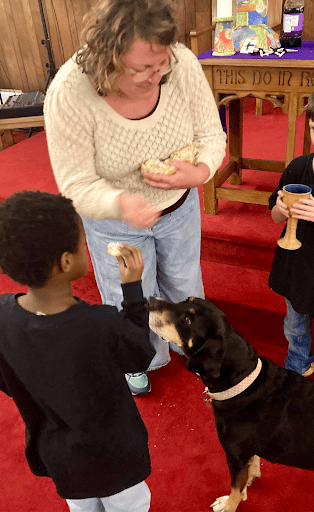
Amanda Rhors-Dodge captures the story of love in her Holy Communion liturgy for Young Clergywomen International:
“In the beginning there was Love, Love so bountiful that it needed something to love, so it created the earth and filled it with all sorts of good things: sheep and horses, cats and dogs, fish and birds. Love made people in Love’s image—made us!—with lips to smile, lungs to laugh, and warm hearts.
It didn’t take long for us to learn the opposite of love—we learned to beat one another with our fists instead of hugging one another with our arms and to offer words of hate instead of praise. Love’s heart ached because of the broken world, so Love spoke through prophets and priests, calling us back to our Creator’s embrace.”
The Gift of Advent
This is what makes Advent so special: we get to return to it every year. Each season gives us another opportunity to pause, to breathe, to wait with purpose. We practice hope in community. We welcome peace. We embrace joy. We return to love.
And as we do, we find that resilience and faithfulness grow within us—light by light, week by week, candle by candle.